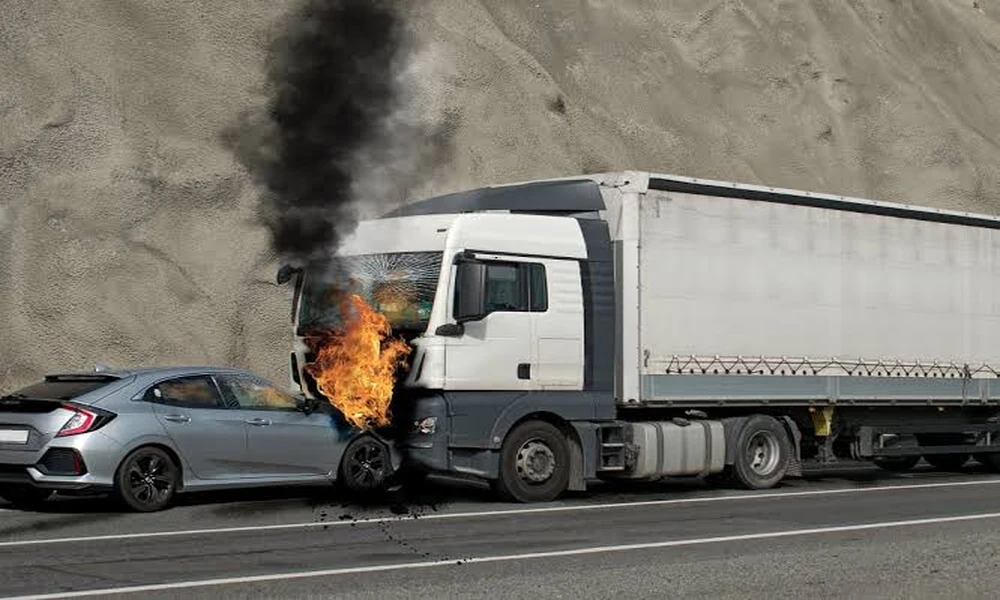
You may still be replaying the crash in your head, or dealing with the part that comes after, the calls, the pain, the missed work, the bills that show up before you even know what your case is worth. A truck crash does that, which is why speaking with a truck accident lawyer can help. It does not just damage a car. It can throw your routine, your income, and your sense of control off balance in a single day.
How truck accident claims work is different from a standard car wreck case because the stakes are often higher and the evidence is harder to lock down. A trucking company may have its own insurer, its own legal team, and records you cannot access on your own. The basic idea is simple enough. You prove who caused the crash, show how badly you were harmed, and demand payment for your losses. The hard part is doing that before key evidence disappears or gets twisted into a story that blames you.
Truck accident claims involve more than one liable party
In a regular crash, the claim often centers on one driver and one insurance policy. In a truck case, there may be several parties at fault. The truck driver may have been speeding, distracted, impaired, or too tired to drive safely. The trucking company may have pushed unrealistic schedules, skipped maintenance, or hired someone with a poor driving history. A cargo company may have loaded the trailer the wrong way. A parts maker may have supplied faulty brakes or tires.
That is why truck accident claims usually start with a broad investigation. Police reports help, but they rarely tell the whole story. Logbooks, black box data, driver qualification files, inspection records, dash cam footage, shipping records, and phone data can all matter. If the truck was part of a commercial fleet, federal and company safety rules may also come into play.
The size and weight of commercial trucks make these crashes especially severe. Research from the Insurance Institute for Highway Safety shows that large truck crashes often lead to catastrophic injuries and deaths, especially for people in passenger vehicles. That reality affects the value of the claim because serious injuries usually mean longer treatment, more lost income, and a deeper effect on daily life.
The claim rises or falls on evidence gathered early
You might think the insurance company will review the facts and make a fair offer. Sometimes it does not work that way. Insurers look for gaps. If there is no clear medical timeline, they may say your injuries are unrelated. If there is no preserved data from the truck, they may deny how the crash happened. If you gave a recorded statement while medicated, upset, or unsure, they may use your own words against you.
A strong commercial truck accident case usually begins with fast action. Photos from the scene, witness names, medical records, vehicle damage, and employer wage information all help build the claim. In many cases, a lawyer sends a preservation letter right away so the trucking company does not destroy or overwrite electronic records.
Crash data also matters because it shows how often these wrecks happen and how they are studied. The National Highway Traffic Safety Administration crash reporting system tracks national crash patterns, which helps frame the larger risks tied to roadway collisions. For working drivers, the CDC’s motor vehicle safety research also points to fatigue, time pressure, and road exposure as recurring hazards.
Damages in a truck accident claim include financial and personal losses
Most people first think about medical bills, and those are a major part of the claim. They are not the whole thing. You may also have a right to recover lost wages, reduced earning ability, future treatment costs, rehabilitation, property damage, and pain and suffering. If the injury changes how you sleep, move, drive, parent, or work, that belongs in the claim too.
Picture someone with a back injury after a rear underride crash. The emergency room visit is only the beginning. Weeks later there may be imaging, physical therapy, injections, missed shifts, and a doctor saying heavy lifting is no longer safe. The claim has to account for the full arc of harm, not just the first invoice.
Handling a truck accident claim alone creates predictable risks
Some people try to manage the claim themselves because they do not want more stress or assume the facts are obvious. In truck cases, the problem is not effort alone. It is access, timing, and leverage. The other side usually knows what records matter and how to narrow the payout.
| Issue | Handling It Alone | Working With a Personal Injury Lawyer |
|---|---|---|
| Evidence preservation | Hard to obtain black box data, driver logs, and maintenance records before they are lost | Formal requests and preservation letters can secure key records early |
| Claim value | Often limited to current bills and car damage | Can include future care, wage loss, reduced earning capacity, and pain and suffering |
| Liability analysis | Focus may stay only on the driver | Can identify the trucking company, loader, maintenance provider, or manufacturer |
| Insurance pressure | Recorded statements and early offers may weaken the claim | Communication goes through counsel, which reduces avoidable damage |
Three steps protect your truck accident injury claim right away
Get medical care and keep every record. Follow up with the doctor, specialist, or therapist you are told to see. Gaps in treatment give insurers room to argue that you were not badly hurt. Save discharge papers, bills, prescriptions, imaging results, and work notes.
Do not give a broad statement or sign releases too soon. The insurer may ask for a recorded statement or a medical authorization that reaches far beyond this crash. You do not need to hand over your whole history before you understand the scope of your injuries and your rights.
Document the crash and your losses in one place. Keep photos, repair estimates, receipts, wage records, and a short daily journal about pain, sleep, mobility, and missed activities. That kind of detail makes a truck accident injury claim harder to dismiss and easier to value accurately.
A clear legal strategy gives you room to recover
A truck crash claim is not only about proving a collision happened. It is about showing who had control, what safety rules were ignored, what evidence supports your version of events, and what this injury has cost you in real life. If you are feeling buried by paperwork and pressure, that reaction makes sense. These cases move fast on the defense side, and you deserve someone moving just as fast for you.
If you were hurt in a truck crash, speak with a personal injury lawyer as soon as you can. The right help can protect evidence, deal with the insurer, and put a value on the losses you should not have to carry alone.